
Chicago home and condo inspections. Know what you’re buying before you close.
I spent 15 years renovating houses, then 13 inspecting them. I know how a house is supposed to go together, which is most of knowing when it hasn’t. One licensed inspector, more than 3,000 Chicago inspections, and a plain-language report the same day.
Condos from $325 · Townhomes from $500 · Single-family from $600 · exact price before you book
- 13 yrsLicensed, after 15 in renovation
- 4.9 / 5150+ Redfin reviews
- Same dayReport in your inbox. Illinois allows 2 business days.
- 3,000+Inspections, every one by me
In their words
What clients say most
Pulled from what buyers actually wrote in their reviews on Redfin, Yelp and Google.
- thorough
- would recommend
- on time
- explains everything
- detailed
- responsive
- knowledgeable
Dan is fantastic! He is extremely detailed and provided such a thorough report following our inspection. We appreciated him taking the time to explain each of his findings, why they would be potential issues, and what our options were to address each point. Dan is overall very thorough, communicative, and professional. We could not recommend his services more!
Dan is the man! Very happy with the inspection we did with Dan and Virtue Inspections. Very responsive, came on time, walked us through the details, and sent us a huge report with detailed observations and recommendations. Can't ask for anything better when it comes to home inspections — go with Dan from Virtue!
If you're in need of a home inspector, please do yourself a favor and contact Dan. We last minute needed someone to do a condo inspection and of the many companies I contacted, Dan was the most responsive, incredibly knowledgeable, and had reasonable rates. He was incredibly detailed, and his final report was very clear with all these tiny nuances I would've never thought would be important. He also took a ton of photographs which I found very helpful later, especially during our attorney review process. We plan on using his services again and have no hesitations about recommending him.
Dan was awesome! He was very knowledgeable, worked very efficiently and was extremely patient in answering all of our questions. The inspection report he sent to us was very thorough and easy to read/understand, which helped us when we created our list of repairs for the seller. We would HIGHLY recommend Dan from Virtue Inspections LLC!
I had a great experience with Virtue Inspections. It was easy to schedule and the inspection started on time. Dan answered my questions, walked me through the highlights of his findings, and provided a very thorough report that I have already referred back to multiple times. As a first time homebuyer, I wasn't sure what to expect, and I wouldn't change a thing.
Virtue Inspections were fantastic and very thorough with inspecting my new condo before purchasing it. There was a very detailed report provided at the end, there were no surprises, they were timely communicators, and overall were fantastic to work with in the purchasing process. Well done!
The inspection report was very thorough and made sure we did not miss or overlook any issues with the house. In addition, the summary also helped us understand at a glance the most important issues to fix versus the nice to fix. We'd be happy to recommend them to our friends.
Extremely professional and thorough inspections. I used Virtue two times for different apartments and was impressed by the quality of their work. The inspection report was clearly outlined and was a helpful component during negotiations.
The words that come up most in clients’ written reviews, biggest first.
The inspection, section by section
How I go through a house
16 sections, in the same order I inspect the house and write the report. Each one shows what I check, what I test, and real comments from past reports.

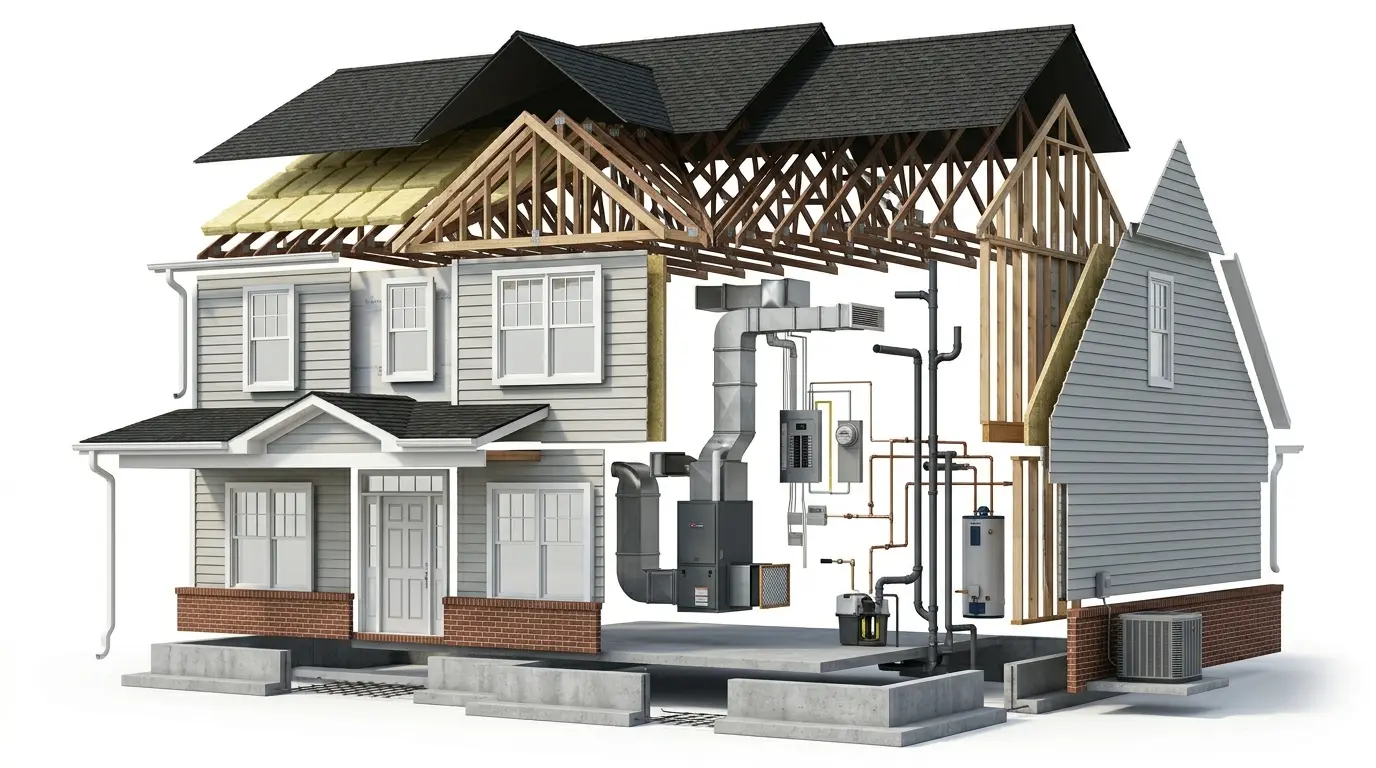
Every inspection follows the Illinois Standards of Practice and covers what can be seen and reached: roof, exterior, structure, attic, crawlspace, plumbing, electrical, heating and cooling, appliances and every room. Condos run $325 to $650. Townhomes and houses run $500 to $1,200. The report comes the same day.
How it works
From address to report in three steps
- 1
Send me the address
Text me or use the form. I’ll reply with an exact price and open times within a few hours, always the same day.
- 2
I inspect, then walk you through it
I go through the whole place, outside in. When I’m done, I’ll walk you through what I found and answer your questions, so you understand the big picture before you leave.
- 3
Get the report the same day
Plain language, photos, and what matters most, while your inspection window is still open.
Pricing
What it costs
The final price depends on size and scope, so send me the address and I’ll give you an exact number. Payment (Cash, Check, Zelle, Venmo) is due when the inspection is done.
Pricing by bedroom count
Condominiums
Studios through 4-bedroom units. I cover everything in and serving your unit, plus a walk-around of the accessible exterior on low-rise buildings. The building’s common elements are the association’s responsibility.
| Condo unit | Price | Time |
|---|---|---|
| Studio | $325 – $375 | 30 – 60 minutes |
| 1 Bedroom | $350 – $425 | 1 – 1.5 hours |
| 2 Bedrooms | $400 – $500 | 1.5 – 2.5 hours |
| 3 Bedrooms | $450 – $550 | 2 – 3 hours |
| 4 Bedrooms | $500 – $650 | 2.5 – 3.5 hours |
Townhomes & single-family
Roof to foundation: structure, roof (walked when safe), attic, crawlspace, electrical, plumbing, heating & cooling, and the full exterior, all in one plain-language report.
| Townhouse | Price | Time |
|---|---|---|
| 1 – 2 Bedroom Townhouse | $500 – $650 | 2.5 – 3.5 hours |
| 3 – 4 Bedroom Townhouse | $600 – $750 | 3 – 4 hours |
| Single-family home | Price | Time |
|---|---|---|
| 1 – 2 Bedroom Home | $600 – $750 | 3 – 4 hours |
| 3 – 4 Bedroom Home | $700 – $850 | 3.5 – 4.5 hours |
| 5+ Bedroom Home | $850 – $1,200 | 4 – 6 hours |
What’s included
Every price covers the full inspection. Here’s what that actually means.
The outside and the bones
I start where water gets in: the roof, gutters and downspouts, flashing and every penetration. I walk the roof whenever it’s safe, and check it from every angle I can get when it isn’t. Then the siding, trim, windows and doors, decks, porches and balconies, and the grading and drainage that decide whether the basement stays dry. Inside, I go through the foundation, structure, attic and crawlspace looking for movement, moisture and problems with the framing that carries the house.
The systems you rely on every day
I run the heating and cooling with the home’s own thermostat instead of just looking at them (cooling only when it’s warm enough outside to do it safely). For plumbing, I check the supply and drain lines and the water heater, and run every sink, tub, shower and toilet for flow and drainage. Electrical goes from the service line into the panel, breakers, grounding and wiring, then out to a representative sample of outlets, switches and GFCIs. And I turn the fans on to make sure the bath, kitchen and laundry exhaust actually moves air.
The rooms you’ll live in
I check the floors, walls, ceilings and trim in every room for moisture and signs of past leaks. In the kitchen, bathrooms and laundry I go through the fixtures, cabinets and counters, and run the major appliances and the washer and dryer through a cycle. Then a sample of interior doors, windows and blinds, the stairs and railings, and the garage: its door, its outlets, and the fire separation between it and the house.
It’s a visual, non-invasive inspection to the Illinois Standards of Practice. I examine what’s visible and accessible that day, and test what I can. Hidden conditions, specialist testing (radon, mold, sewer scope) and code compliance aren’t part of it. When something needs a closer look, the report says so plainly and tells you which specialist to call.
Who you’re hiring
One inspector, start to finish
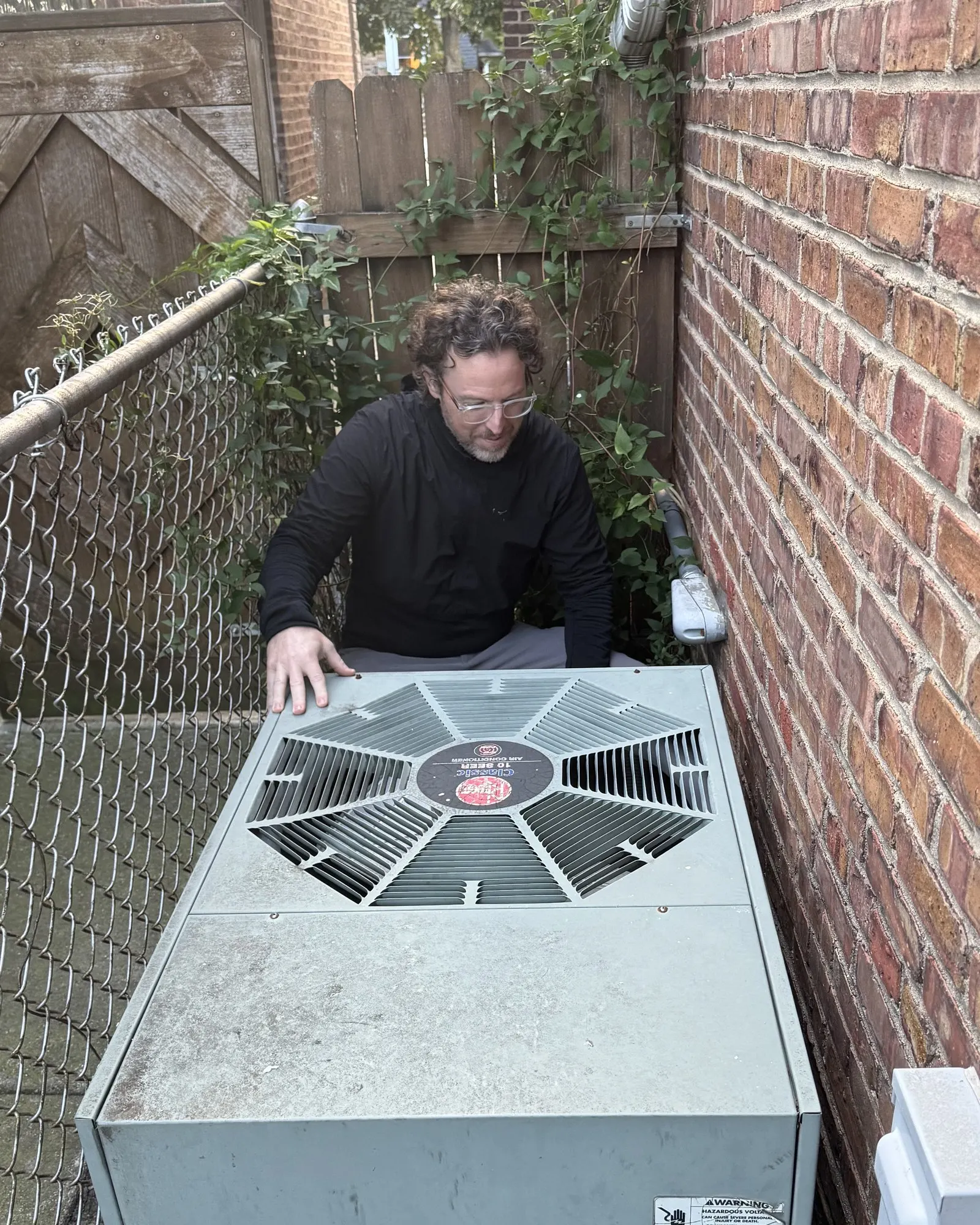
I’m Daniel Murphy, and Virtue Inspections is just me. The person who answers your text is the one who shows up, inspects the place, walks you through it at the end, and writes your report the same day.
Before I inspected houses, I spent 15 years renovating them. That’s where I learned what gets hidden behind drywall, what gets skipped when a flip runs over budget, and what a good repair looks like next to a fast one. I’ve been a licensed Illinois inspector for the 13 years since, with more than 3,000 Chicago-area homes and condos behind me. At a bigger firm, you get whoever’s free that morning. With me you get the same eyes and the same phone number every time, and I still pick up after the inspection.
Buyers rate me 4.9 out of 5 across more than 150 Redfin reviews, Redfin lists me as 1 of only 7 Redfin Recommended Inspectors in the Chicago area, and the reviews on Yelp say the same thing in different words: thorough, on time, explains everything, report the same day.
I’m licensed, insured and InterNACHI certified. The details are below if you want to check them.
- License: State of Illinois #450.010923
- InterNACHI Certified Professional Inspector®
- General Liability · E&O insured
Good to know
Questions people ask
What a home inspection covers, what it doesn’t, and how mine work.
How soon will I get the report?
The same day as the inspection. Illinois allows up to two business days. If we finish late in the evening or the home is very large, it may come the next day, and I’ll let you know before I leave.
How fast will I get a quote?
Send the address and I’ll reply with an exact price within a few hours, always the same day.
How long does the inspection take?
About 30 minutes for a studio, up to 6 hours for a large house. Your quote tells you how long yours will take.
Can I be there?
Yes. When I finish, I’ll walk you through what I found and answer your questions, so you understand the big picture before you leave.
When and how do I pay?
At the end of the inspection, by cash, check, Zelle or Venmo.
What happens if you find something serious?
I flag it clearly in the report, along with the kind of specialist who should look at it next, and I’ll go over it with you when I walk you through the findings. What to do about it is a call for you, your agent and your attorney.
Will you walk the roof?
Yes, when it’s safe, which is most roofs. When it isn’t, I check it from the ground, from the windows and from a ladder at the edge.
More detail
Yes, when there’s adequate access and the roof is safe to walk, and I walk the large majority of the roofs I inspect. When I can’t, I evaluate the roof from the ground with binoculars, through upper-level windows, and from the roof edge with a ladder. Things that keep me off a roof include steep pitches, wet, snowy or icy surfaces, and fragile materials that can be damaged (slate, wood shingles, clay tile). In rare cases, like a multi-story home with a flat roof and no rear deck or balcony for access, a professional roofing contractor may be needed, likely at an additional charge to you.
Is a condo inspection a building inspection?
No. I inspect your unit and what serves it, plus a walk-around of the accessible exterior on low-rise buildings. The building itself belongs to the association, so ask them for reserves, repair plans and board minutes.
More detail
No. I don’t perform a building inspection. That requires far more time and access at substantially higher cost. The building’s common elements, components and systems are the HOA’s responsibility. Get everything you can from the HOA on the condition of common elements, maintenance schedules, ongoing issues, expected remaining useful lives, reserves, and past board minutes (for example, special assessments). High-rise building exteriors and roofs are excluded because of their complexity and on-site engineering and maintenance staff.
What’s included?
The home’s visible, accessible systems: roof, exterior, structure and foundation, attic and insulation, plumbing, electrical, heating and cooling, and garages, with fixtures and appliances run to see that they work.
More detail
When present, visible and readily accessible, I cover: heating, cooling (when it’s warm enough outside to run it safely), ventilation, plumbing, electrical, structural members and foundation, crawlspace, attic, insulation, exterior siding, exterior trim and flashing, exterior grading, walkways and driveway, roof, gutters and downspouts, porches, decks, patios, balconies, and attached or detached garages. I functionally test plumbing fixtures (sinks, tubs, showers, faucets, toilets) for operation, flow and drainage, and I test appliances, mechanicals, and a representative number of outlets, lights, switches, cabinets, interior doors, windows and blinds to confirm they operate at the time of the inspection. These are limited functional tests that don’t replicate everyday use.
What’s not included?
Specialty and environmental items like radon, mold, asbestos, lead and pests, plus pools, wells, septic, security and irrigation systems. It’s also not a code inspection.
More detail
A standard home inspection doesn’t include inspection, testing or evaluation of: EIFS siding, lightning arrestors, timers, remote and radio controls, security systems, intercoms, sound systems, irrigation systems, the health of trees and landscaping, fire suppression systems, exterior gas lines and grills, exterior or temporary heating and cooling systems, solar systems, green building systems, recreational facilities (pools, spas, saunas), play-sets, water quality, water filtration, well systems, septic systems, solid fuel burning appliances, central vacuum systems, safety glazing, and anything inaccessible or disconnected at the time of the inspection. I don’t operate or test alarm devices, but I report the presence or absence of smoke and carbon-monoxide detectors, as Illinois law requires. It also doesn’t test for radon, mold or fungi, asbestos, lead paint, formaldehyde, fire-retardant treatments, toxic or flammable materials, carbon monoxide, indoor air quality, electromagnetic radiation, water or soil contamination, underground storage tanks, or other environmental hazards, nor for rodents, pests, termites or other wood-destroying organisms.
Can you do radon testing or a sewer scope?
Yes. They aren’t part of the home inspection, but I arrange both through licensed contractors. Mention it when you request your quote.
Do you give repair estimates or contractor referrals?
No, to stay independent. homewyse.com is a good guide to typical repair costs.
More detail
No. A licensed specialist can give you more detailed observations and may find more than a home inspection covers, so I strongly recommend having any noted issues further evaluated before closing. A good resource for general cost estimates is www.homewyse.com. I also don’t make contractor referrals, to avoid any appearance of a conflict of interest. Good resources are HomeAdvisor, Angi and Yelp. Any contractor you hire should be properly qualified, licensed, insured, and working to local building requirements.
Are you licensed and insured?
Yes. Illinois license #450.010923, InterNACHI certified, with general liability and errors and omissions insurance.
More detail
Yes. I’m fully licensed by the State of Illinois as an individual home inspector (Daniel Murphy #450.010923). I’m also a Certified Professional Inspector® trained by InterNACHI, the world’s largest association of residential and commercial property inspectors. To hold that certification I had to pass an inspector exam, follow a comprehensive Standards of Practice, abide by a strict Code of Ethics, and complete accredited continuing education every year. That’s all well beyond what Illinois requires. I carry general liability and errors & omissions insurance on the inspections I perform, as added protection for both of us. That insurance isn’t a home warranty or a home insurance policy. A home inspection gives you as much information as possible to make an informed decision, but it isn’t designed to eliminate all risk and shouldn’t be treated as a warranty, guarantee or insurance policy of any kind.
Is it a warranty or a code inspection?
Neither. It’s a snapshot of what’s visible that day, not a guarantee. Code questions go to the city.
More detail
No. A home inspection doesn’t predict future conditions or offer any guarantee or warranty. It won’t reveal every problem that exists or could ever exist, only the material defects visible on the day. Defects can be concealed and only surface during renovations, mechanicals that work can fail unexpectedly, and weather can expose issues that weren’t visible or foreseeable (ice damming in a snowstorm, moisture intrusion during a wind-driven rain). Always ask the seller for everything they know about past or ongoing issues, insurance claims, and repairs. The inspection is a snapshot of the property on that date and time. It’s also not a code inspection. Home inspectors aren’t code inspectors. The report may flag conditions that appear to violate building codes, but confirming code compliance or identifying violations is beyond the scope of a home inspection. That has to come from your local building or zoning department. For that, schedule a building code compliance inspection.
Can you give real estate advice?
No. Illinois law doesn’t allow home inspectors to give it. Your agent is the right person to ask.
More detail
No. Illinois law prohibits home inspectors from offering real estate advice. Please send any of those questions to your real estate professional.
What exactly is a home inspection?
A visual, non-invasive look at the home’s structure and systems by a licensed generalist, to find the material defects you can see that day. A specialist like a licensed plumber or electrician may find more.
More detail
A qualified home inspector examines and provides written information about the condition of the structure, systems and components of a property at the time of the inspection. Illinois law requires all home inspectors to be licensed by the Department of Financial and Professional Regulation. A home inspection is a non-invasive, visual examination of a residential property, performed for a fee, designed to identify observed material defects in the structure, components and systems visible at the time of the inspection. Systems include mechanicals, electrical, plumbing, and HVAC. It’s performed to the Standards of Practice set forth by the Illinois Home Inspector License Act. A written summary of the visible conditions of the structure, systems and components at the time of the inspection. It describes and identifies those systems and any material defects observed, and may recommend repairs, replacements, corrections, monitoring or further evaluation by qualified contractors. A material defect is any condition with a significant adverse impact on the value of the property, or that produces an unreasonable risk to people. The fact that a system is near, at, or beyond the end of its expected useful life is not, on its own, a material defect. A home inspection is visually based and not technically exhaustive. I don’t perform engineering, architectural, or any function requiring a separate occupational license such as a licensed plumber or electrician. Home inspectors are generalists, not specialists, and don’t determine adequacy using specialty equipment, measurements, calculations, or analysis that requires specialized knowledge. A specialist with their own training and tools can go deeper and may find issues beyond the scope of a home inspection. That’s why I refer observed issues out for further evaluation.
Get started
Send the address, get a quote
Under contract? Your inspection window is days, not weeks. Send the address and you’ll have an exact price within a few hours, and your report the same day as the inspection. I cover Chicago, Cook County, Chicagoland.
- Call, text or email Contact me
- Payment Cash, Check, Zelle, Venmo, due at completion
- Reports same day as the inspection